Working with the G1#
Tools and practical lessons for building research experiments on the Unitree G1.
Cube stacking brought together the main parts of this work: camera and arm calibration, object pose estimation, offline grasp qualification, CuRobo planning, robot control and experiment recording. The demonstration chapter explains how those pieces fit together and connects the result to its implementation and recorded evidence.
This guide explains the engineering behind that result, including the failures that shaped the tools. Use it to understand the demonstrated system or to build a different experiment on the G1.
Behind the demonstration#
What you want to understand or reuse |
Read next |
|---|---|
How an application acquires control, keeps holding during planning and returns control after a run |
|
How the camera, printed targets and arm model establish where objects are |
Camera and network, targets and mounts, object pose, calibration |
How grasp proposals are qualified and used in checked motion plans |
|
What was recorded, how it becomes LeRobot data and how to inspect it |
For physical setup, start with the lab robot. Repositories and setup helps you choose the code and environment for the part you want to use. When something fails, debugging from evidence connects symptoms to the observations that changed the implementation.
Simulation and hand sensing#
These investigations have their own setups and results. The initial MuJoCo backend supports the G1Pilot arm and hand interfaces. The pressure tools inspect Dex3 sensor readings without publishing hand commands.
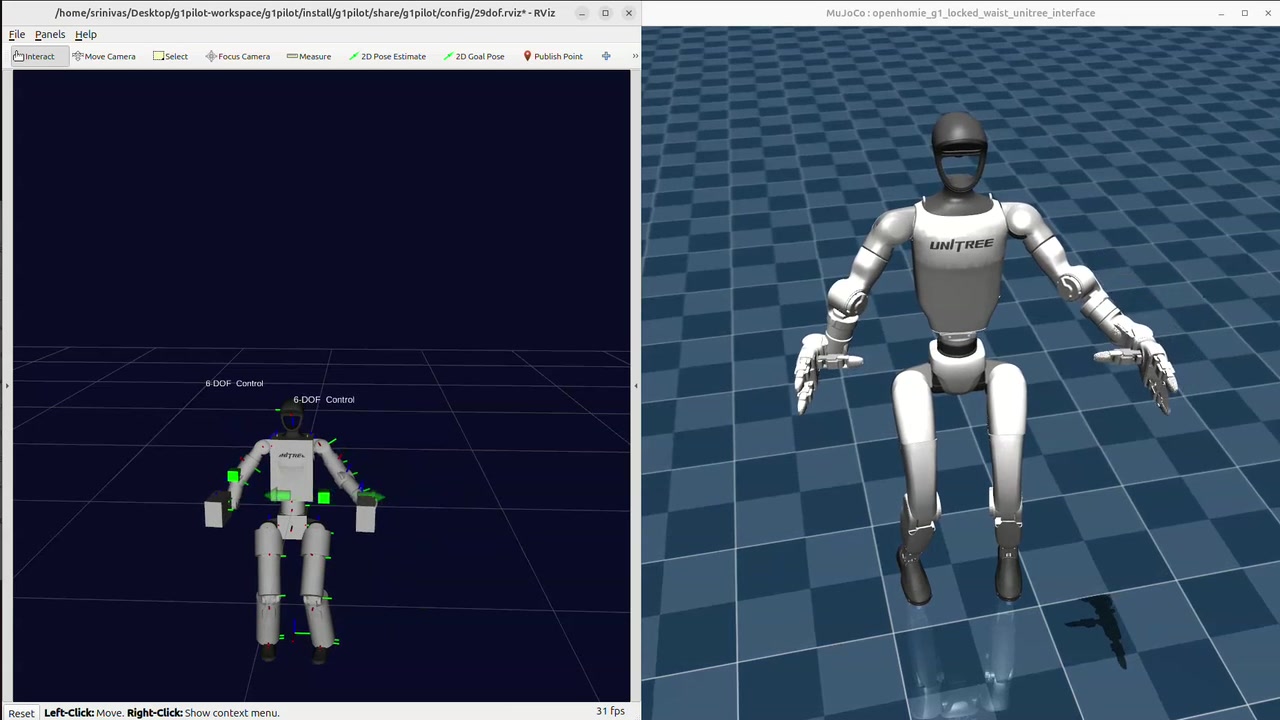
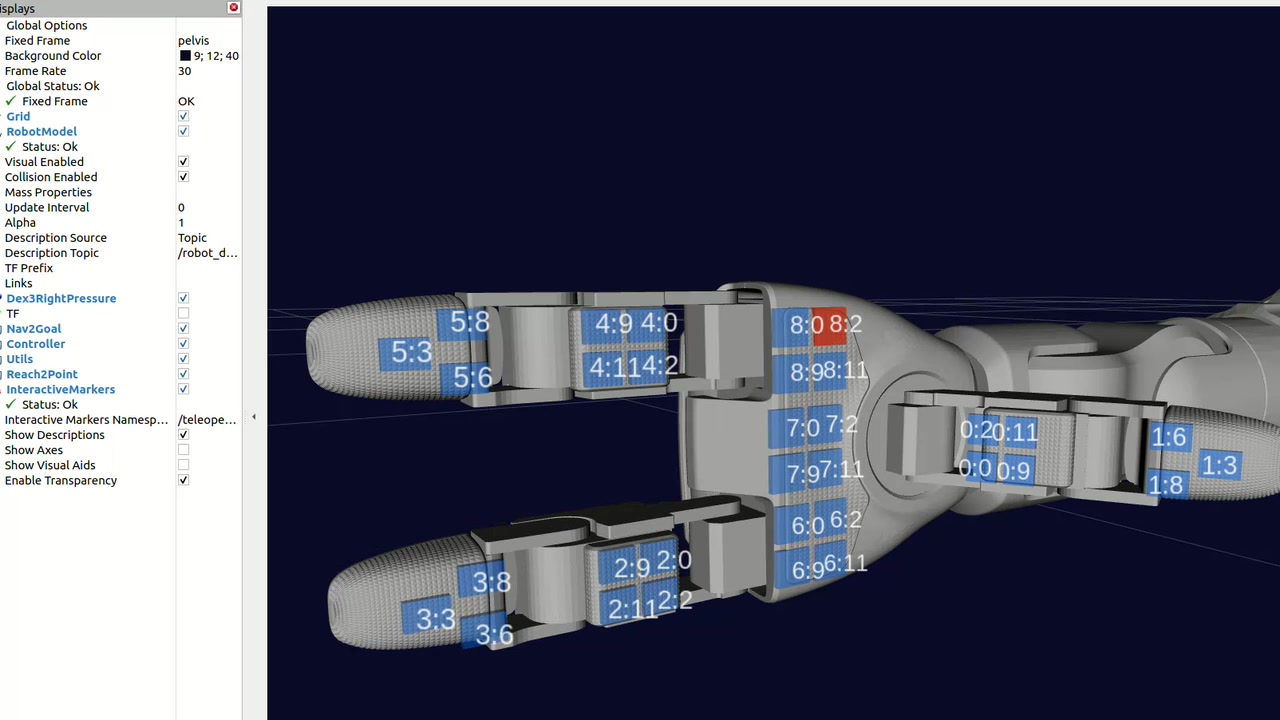
Assembly and support experiments and moving-target MPC explain further planning studies and their unresolved limits.
Working with the code#
The system map explains the component boundaries; the code index links the files and functions discussed in the chapters. For agents reading this guide gives the reading order, source-version conventions and evidence requirements.
The guide distinguishes the demonstrated August tabletop code from September calibration development. Sources and attribution identifies the published revisions and upstream work.
This is a working draft. Remaining review needs records specific gaps. About describes authorship and project context; maintaining the guide explains how to extend it.